Flight tests are how NASA turns new ideas into real technology. These tests help transform bold concepts into safer, more efficient tools for everyone. This includes everything from flying humans faster than sound to designing parts for the space shuttle.
Wayne Ringelberg, chief pilot at NASA’s Armstrong Flight Research Center, explained that flight tests safely prove new technology. This helps authorities certify equipment and allows industry to improve systems. It also encourages research for new ideas.

Decades of Innovation
For almost 80 years, teams at NASA Armstrong have used flight testing in the Southern California desert. Their work pushes the limits of aerodynamics and advances aviation. Because of this, NASA innovations are now in every U.S. commercial aircraft and control tower.
We're a new kind of news feed.
Regular news is designed to drain you. We're a non-profit built to restore you. Every story we publish is scored for impact, progress, and hope.
Start Your News DetoxRingelberg noted that NASA's space missions also use flight tests. Every mission, like Artemis II, involves something new or different.
Every NASA test flight needs many people working together. This includes engineers, researchers, pilots, maintenance crews, and control room operators. They all help test new software, hardware, or experimental X-plane technology.
Ringelberg said that experienced operators and engineers check how things work in flight. While most new technologies are designed for labs or wind tunnels, you only truly know how they perform once they fly.
From Lab to Sky
Before a flight, tests often include computer analysis, simulations, wind tunnel tests, and ground tests. These check if an aircraft can handle flight forces and different environments. Once hardware or software is safe, the flight test team takes over.
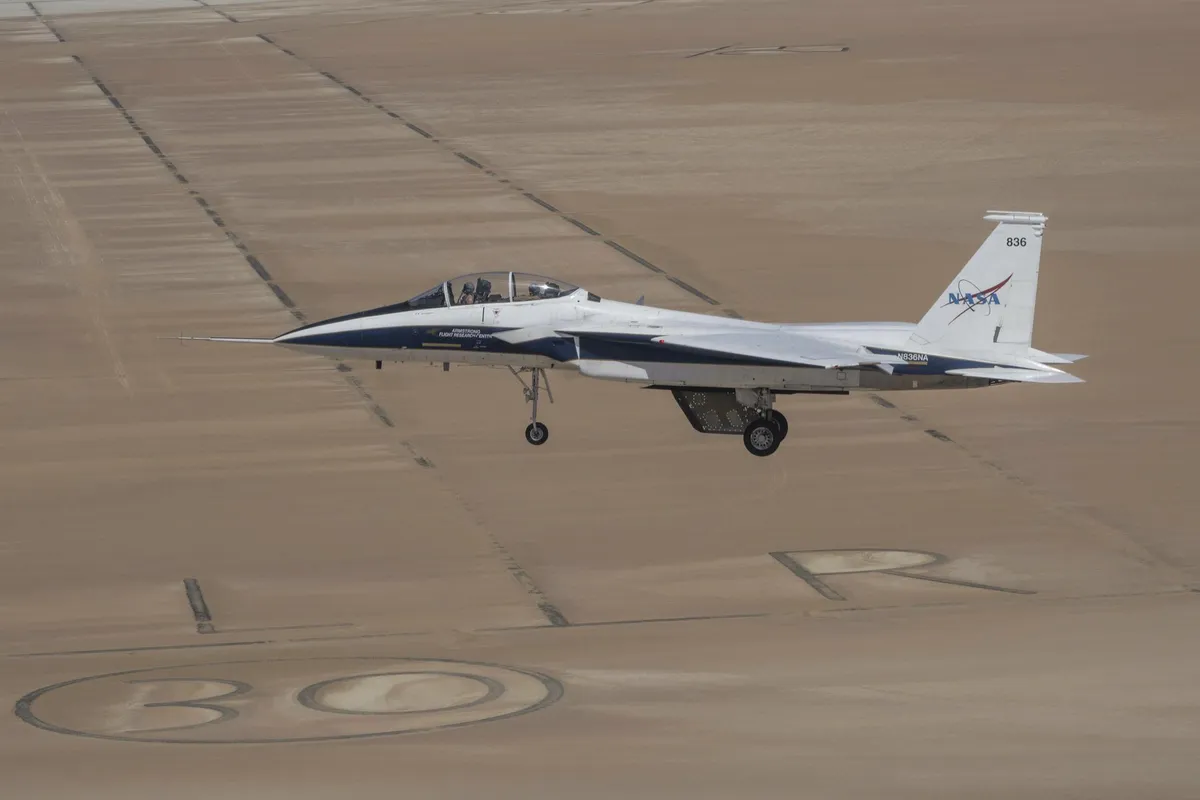
NASA Armstrong has a fleet of aircraft modified to hold new hardware or instruments and integrate new software. These planes are like flying laboratories, and pilots are trained for experimental missions.
For example, recent flight tests helped NASA collect important data on laminar flow, which is the smooth flow of air over a wing. This research could help lower fuel costs for future airliners. Computer models and wind tunnel tests helped advance the research. To learn even more, NASA used a scale model in actual flight.
Researchers attached the Crossflow Attenuated Natural Laminar Flow (CATNLF) model wing to the underside of one of NASA Armstrong’s F-15s. This setup allowed them to gather all needed information without the extensive and costly changes required for a full-scale wing.
After a series of flights, engineers and researchers analyze the data. They check if instruments worked, if the experimental aircraft flew safely, and if software operated as planned. Each test brings new questions to answer.
NASA continues to work with universities, the Department of War, and industry partners. Their goal is to advance U.S. aviation through flight tests and bring new benefits to the public.