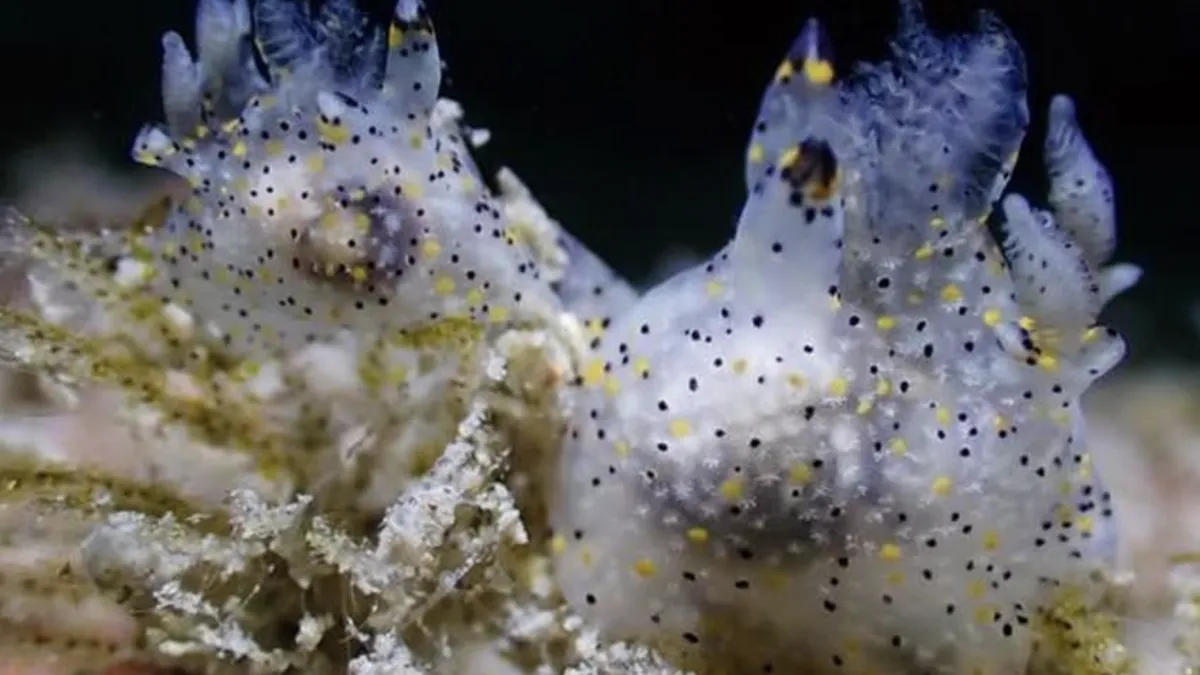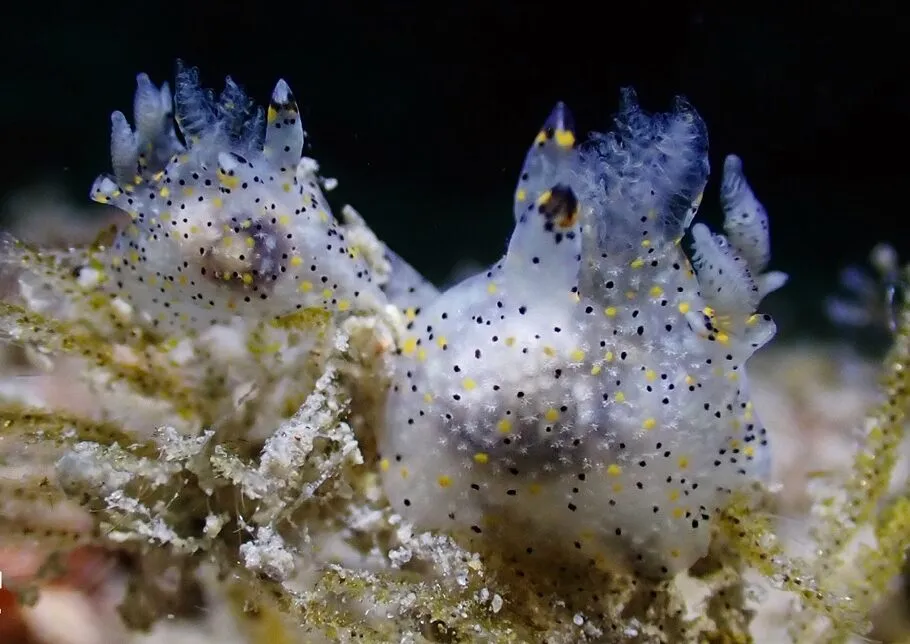
Good news for anyone who thought the ocean had run out of adorable, polka-dotted creatures: Scientists have officially named a brand-new species of sea slug. It's so small it measures just three millimeters, boasts black and yellow spots like scattered sesame seeds, and, naturally, goes by the name Thecacera sesama.
This tiny marvel first caught the eye of Ho-Yeung Chan, then an undergraduate, during a dive in Taiwan's coastal waters back in 2019. He snapped a photo, posted it to Facebook, and asked an expert if he'd stumbled upon something new. Turns out, he absolutely had. Because apparently, that's how major scientific discoveries are confirmed now: with a quick check-in on social media.
To make it official, Chan and his team embarked on a quest, collecting six of these minuscule mollusks between May 2021 and June 2025. (Yes, you read that right — diving for tiny slugs during typhoon season. Dedication, thy name is marine biology.) They then got down to the serious business of body scans and DNA analysis, confirming T. sesama as the seventh member of its genus, Thecacera.
We're a new kind of news feed.
Regular news is designed to drain you. We're a non-profit built to restore you. Every story we publish is scored for impact, progress, and hope.
Start Your News DetoxAnd here's the kicker: It’s the first new species named in that genus in almost 30 years. Let that satisfying number sink in.
Despite its diminutive stature, T. sesama is quite the show-off. Its bright white body, sprinkled with those signature black and yellow spots, makes it stand out. While it shares some family resemblance with Thecacera pennigera (which rocks black and orange spots), T. sesama is smaller, genetically distinct, and has a very specific palate: it dines exclusively on bryozoans, those charmingly named "moss animals." Which, if you think about it, is both impressive and slightly terrifying for the bryozoans.