For a long time, we pictured the high, craggy Pyrenees mountains as some kind of pristine, untouched wilderness. A place only goats and particularly ambitious hikers dared to tread. Well, archaeologists just went ahead and shattered that romantic notion, revealing a 10,000-year history of human activity, complete with ancient shelters and signs of persistent mountain living.
Basically, people have been hanging out in these supposedly 'inhospitable' peaks for way, way longer than we thought. They weren't just passing through; they were living there.
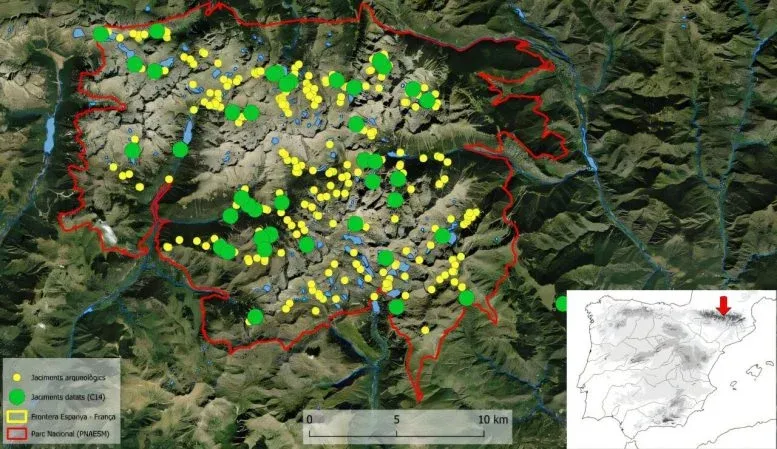
Researchers from the Universitat Autònoma de Barcelona (UAB) compiled a new timeline, pulling from an open-access database of carbon-14 dates from Aigüestortes i Estany de Sant Maurici National Park (PNAESM) in the Spanish Pyrenees. This park, by the way, boasts 380 identified archaeological sites. Let that satisfying number sink in.
We're a new kind of news feed.
Regular news is designed to drain you. We're a non-profit built to restore you. Every story we publish is scored for impact, progress, and hope.
Start Your News DetoxNot So Wild After All
The database includes 124 radiocarbon dates from 45 of those sites. Ermengol Gassiot, who leads UAB's High Mountain Archaeology Group, noted that this is the first public collection of dates for such a high-mountain area in the Pyrenees. Which, if you think about it, is both impressive and slightly terrifying for anyone who's ever tried to set up a tent in the wind at 2,000 meters.
The findings confirm that humans were comfortably above 2,000 meters for over ten millennia. Three sites, in particular, show continuous occupation across thousands of years. The granddaddy of them all is the Obagues de Ratera rock shelter, perched at 2,320 meters, first used a staggering 10,000 years ago. It saw action during the Mesolithic, Neolithic, Bronze Age, Iron Age, and even the 19th and 20th centuries. Talk about prime real estate.
Guillem Salvador, a co-author, called this an "exceptional temporal sequence." Apparently, few sites in Catalonia, even at lower elevations, can boast such a long guest list.
Ancient Architects and Busy Peaks
The analysis also pinpointed specific eras when the mountains were practically buzzing with human activity. Think the end of the Neolithic era (5,300 to 4,500 years ago), late antiquity, and the early medieval period. Because apparently, the high mountains were the place to be.
And it gets better: they also dated the oldest known stone architecture in the Pyrenees. At the Portarró rock shelter, archaeologists found structures with a dry stone base and wood, dating back a cool 5,000 years. Imagine building a house out of sticks and rocks that lasts five millennia. Modern contractors, take notes.
Gassiot explained that these seemingly "inaccessible and inhospitable" high-mountain areas often show long periods of human occupation. This research, combining over 20 years of work, solidifies the idea that humans weren't just visitors; they were residents. It even shows a clear increase in presence above 2,000 meters around 5,300 years ago, right around when Ötzi, the famous Tyrolean Iceman, was making his way across the Tisenjoch glacier.
So, next time you're gazing at a majestic, seemingly untouched mountain range, remember: someone probably built a house there 10,000 years ago. And they probably had a killer view.