Archaeologists have found a forgotten 3,000-year-old Egyptian tomb near Luxor. This discovery offers new insights into ancient Egyptian burial customs. However, the tomb is now at risk from flash floods.
An international team is working in the Theban necropolis, a UNESCO World Heritage site. Their main goal is to protect monuments in Lower Sheikh ʿAbd el-Qurna from intense rainfall and flooding. During this work, they unexpectedly found the unknown tomb.
Uncovering a Ramesside Tomb
The tomb's layout is typical for elite tombs from the New Kingdom period (about 1550-1069 BC). Thebes, now Luxor, was Egypt's capital then. The tomb has an outer courtyard, a chapel carved into rock, and underground burial chambers.
We're a new kind of news feed.
Regular news is designed to drain you. We're a non-profit built to restore you. Every story we publish is scored for impact, progress, and hope.
Start Your News DetoxThe courtyard is well-preserved. It includes a mudbrick platform with a spot for a stela, which is an upright stone grave marker. There's also a staircase with ramps leading into the tomb.
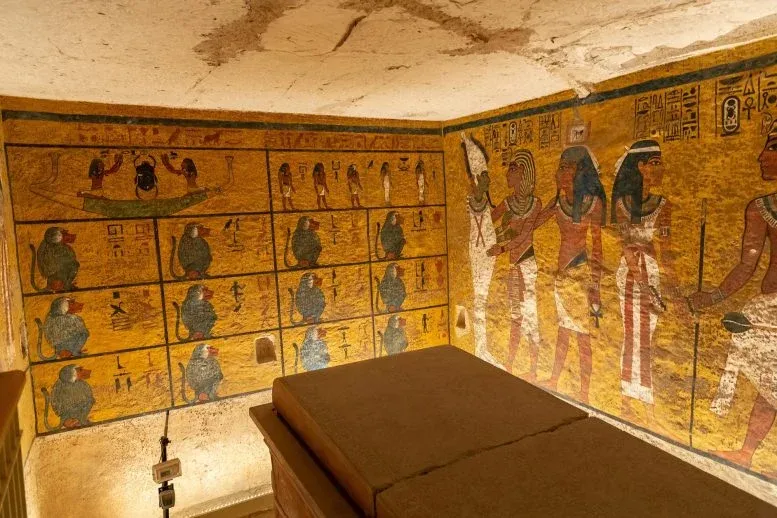
Inside the rock-cut chapel, the walls are covered with vivid paintings. These show the tomb owner worshipping gods and sitting with his wife at an offering table. The table is full of food like bread, beer, fruits, meat, and flowers.
Based on the art style, the tomb dates to the Ramesside period (about 1292-1069 BC). This era is named after the many pharaohs called Ramesses. These paintings provide important historical details about daily life and society in ancient Egypt. They also hint at the tomb owner's status and other family members buried there.
The vast Theban necropolis covers about 10 square kilometers. It was Egypt's main cemetery for royals and elites for 500 years, starting around 1550 BC. It includes famous sites like the Valley of the Kings and Valley of the Queens.
Identifying Paser and Future Research
Initial analysis of the paintings suggests the main owner was a male official named Paser. The paintings are currently covered in dirt. Once cleaned by a conservation expert, more details about the people buried there are expected to emerge.
Researchers want to understand why officials like Paser chose to reuse, modify, or build tombs next to older monuments during the Ramesside period. They are looking into how factors like proximity to processional routes, family tombs, or important cult sites influenced these decisions.
Protecting the Tomb from Climate Change
The work is urgent because climate change is increasing the frequency and intensity of flash floods in the area. Flooding can cause severe damage, including salt crystal growth, loss of paintings, and even structural collapse.
The project aims to implement a program to protect these monuments for future generations. This conservation effort also allows archaeologists to explore the Lower Sheikh ʿAbd el-Qurna necropolis for the first time. This area has been largely unstudied compared to famous nearby sites.
Ongoing research shows that Lower Sheikh ʿAbd el-Qurna is rich in archaeological material. It contains beautifully decorated tombs that offer a unique look into the lives, beliefs, and art of Egypt's ordinary people and officials over many centuries.
Deep Dive & References
Conservation and risk management program New Kingdom period Egyptian Ministry of Tourism and Antiquities The Conversation