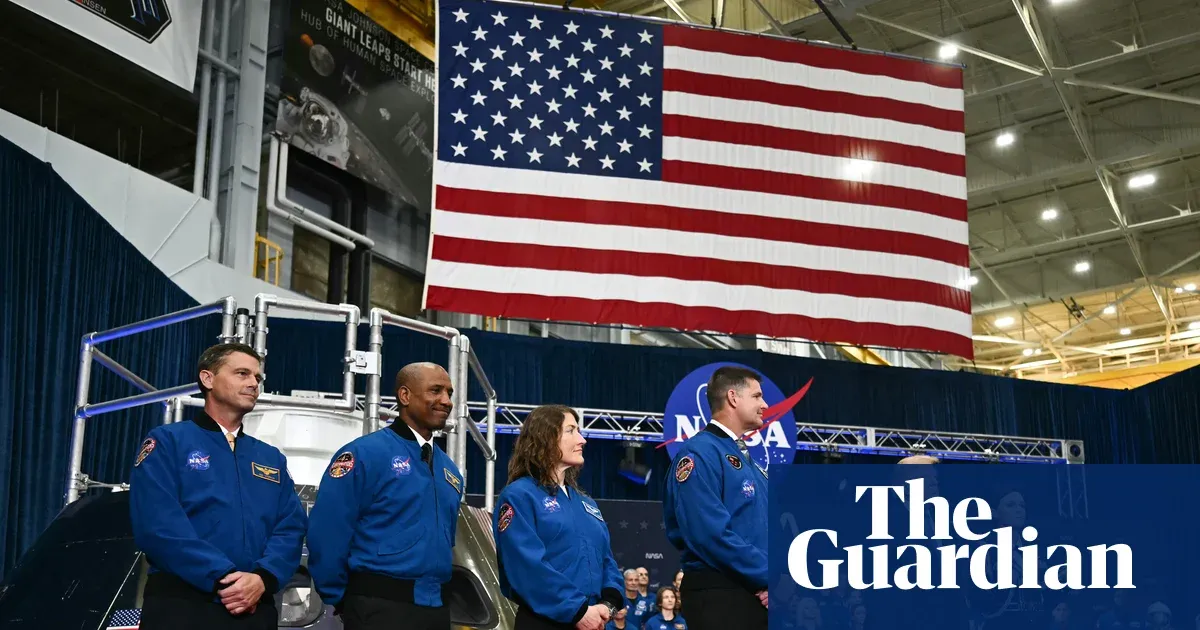
Turns out, flying around the moon and setting a new distance record for humanity isn't just a good story for the grandkids. It also gets you a shiny medal, specifically the US's highest space honor, the Congressional Space Medal of Honor. And for the three Americans and one Canadian of the Artemis II mission, that's exactly what happened.
Former President Donald Trump, in a move that signals space is indeed "the hot thing" (his words, not ours), presented the medals at Houston's Johnson Space Center. This isn't just about celebrating a successful lunar flyby from April; it's also about setting the stage for what's next. Because apparently that's where we are now: the moon, and then, very shortly, Mars.
The New Space Academy and a Very Big Rocket
Amidst the accolades, Trump also announced a brand-new US space academy, destined to serve everyone from the Space Force to NASA to commercial space companies. Location, location, location? Still undecided, but the ambition is clear: the cosmos are calling, and we need more smart people to answer.
We're a new kind of news feed.
Regular news is designed to drain you. We're a non-profit built to restore you. Every story we publish is scored for impact, progress, and hope.
Start Your News DetoxCommander Reid Wiseman, pilot Victor Glover, and mission specialists Christina Koch and Jeremy Hansen (our Canadian friend) weren't just taking a scenic detour. Their close shave with the moon — 4,067 miles (6,545 km) away, if you're counting — was a critical test flight for NASA's new Orion capsule. And let's not forget the ride: a 30-story tall moon rocket that had only flown once before. Which, if you think about it, is both impressive and slightly terrifying.
They didn't land, no, but they did pave the way. Artemis III will practice some orbital docking next year, and Artemis IV aims to put two astronauts near the lunar south pole by 2028. Because, as Trump declared, Americans will be back on the moon before his second presidency wraps up. And then, Mars. Soon.
An Elite Club, a Blue Flight Jacket
This isn't just any medal; it’s an exclusive club. Only 30 astronauts received it before the Artemis II crew, many posthumously. Neil Armstrong was the first, back in '69, for that whole "one small step" thing. More recently, Doug Hurley and Bob Behnken got theirs in 2023 for launching on a SpaceX rocket, bringing crew launches back to US soil.
The ceremony was a who's who of space legends, including 91-year-old Apollo 17 moonwalker Harrison Schmitt. He noted his mission was the most productive lunar exploration at the time, quickly adding, "Soon to be surpassed by Artemis." A mic drop from a moonwalker, if you will.
Why all the fuss about the moon's south pole? Frozen water in shadowed craters, apparently. Enough for rocket fuel and drinking water. And with China also eyeing the region, NASA Deputy Administrator Matthew Anderson didn't mince words: "The second space race has begun."
As the two-hour event wrapped, the Artemis II crew, true to their word, presented Trump with a blue flight jacket adorned with space patches. Because nothing says "thanks for the highest honor" like some sweet, personalized outerwear. Then, in a truly modern twist, the president popped into mission control to call the International Space Station, sharing the good news about the new academy and even handing the phone over for a quick "hello" between spouses. Because even in space, family calls.