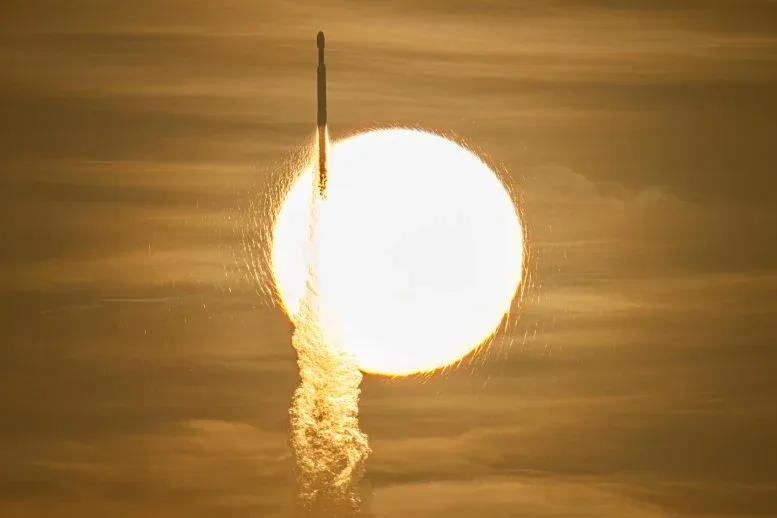
NASA's newest eye on the cosmos, the Nancy Grace Roman Space Telescope, just started a three-month, million-mile road trip. Its destination? A spot a million miles from Earth, where it'll spend the next few years staring into the universe with a wide-angle, infrared lens. Because apparently, we haven't seen enough yet.
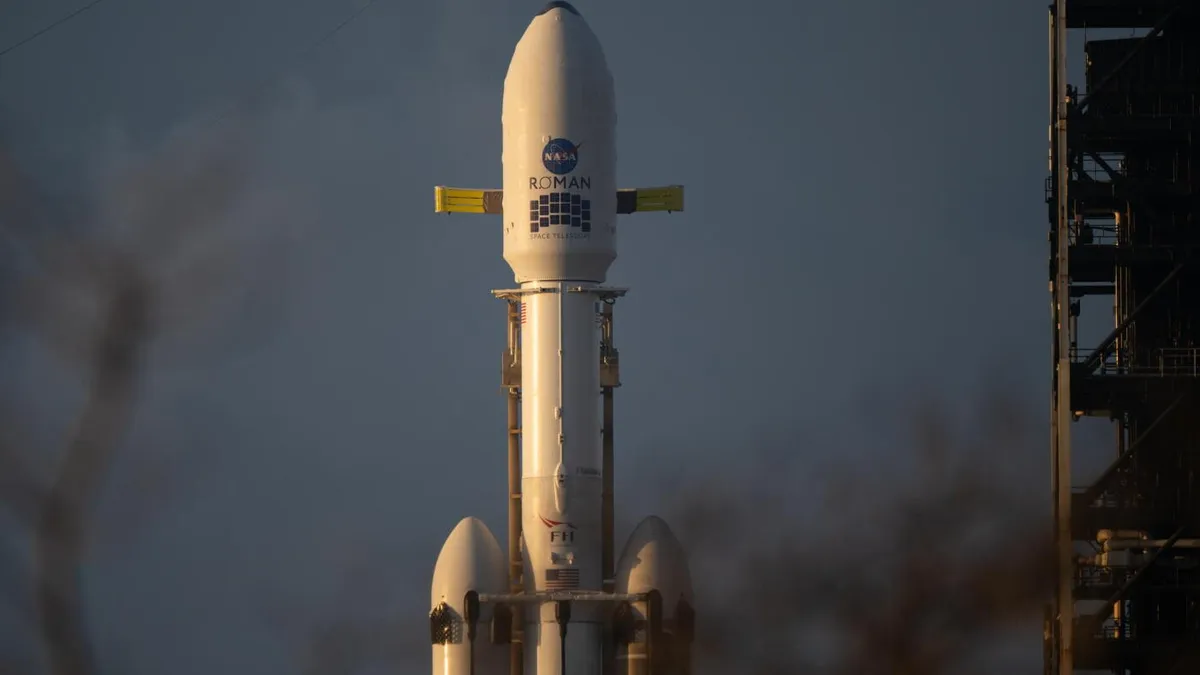
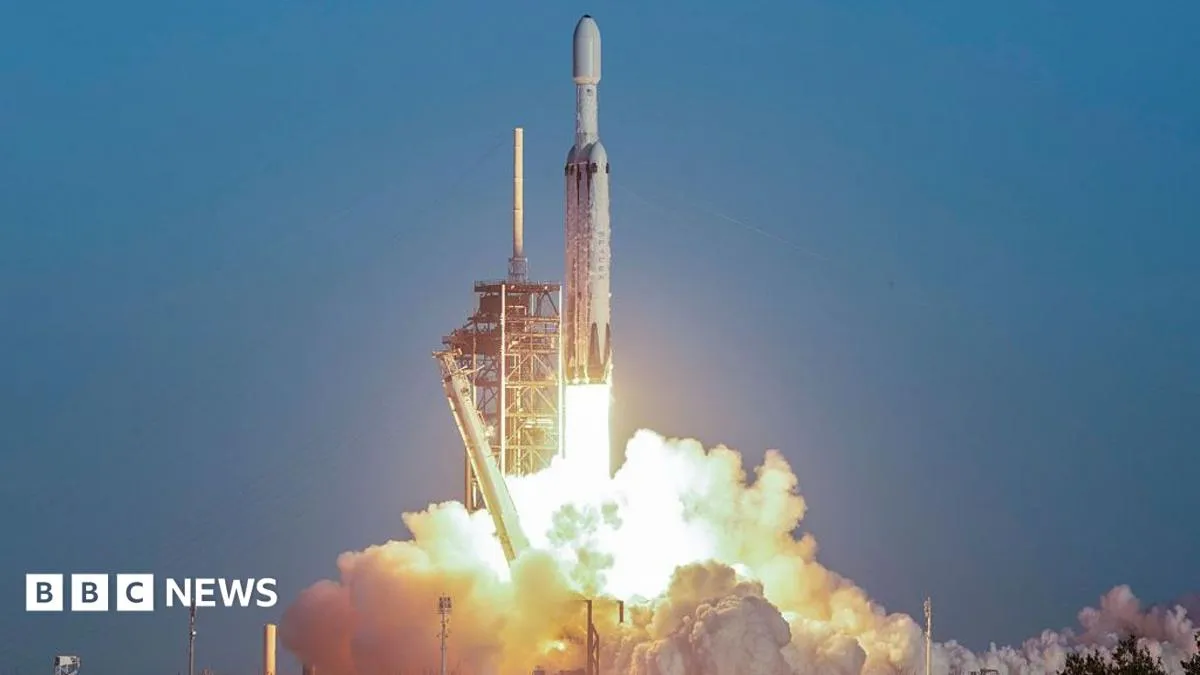
Launched on a SpaceX Falcon Heavy from Florida, Roman is basically a cosmic detective. It's on a mission to unravel the universe's biggest mysteries: dark matter (the stuff that holds galaxies together but we can't see), dark energy (the stuff that's pushing galaxies apart), and exoplanets (worlds beyond our solar system). Its broad surveys are also expected to lead to discoveries beyond its main scientific goals. Basically, it's going to find a lot of stuff we didn't even know we were looking for.
NASA Administrator Jared Isaacman noted that Roman was delivered ahead of schedule and on budget. He said the mission shows the dedication of NASA and its partners. Isaacman believes Roman will provide a new map of the universe and push the limits of discovery.
We're a new kind of news feed.
Regular news is designed to drain you. We're a non-profit built to restore you. Every story we publish is scored for impact, progress, and hope.
Start Your News DetoxNicky Fox, associate administrator for the Science Mission Directorate at NASA, called Roman a "discovery machine." She said it will help answer profound questions about our cosmic history. Fox added that Roman's wide view and fast survey speeds will make the invisible visible, setting the stage for the search for life beyond our solar system.
The Million-Mile Commute
Controllers at NASA's Goddard Space Flight Center began receiving data from Roman shortly after liftoff. The telescope separated from the rocket 31 minutes after launch. The rocket's boosters returned safely to the launch site for future use.
Roman's journey isn't a straight shot. It's heading to a gravitational sweet spot called L2, the second Sun-Earth Lagrange point. This is a place where the gravity of the Sun and Earth balance out, allowing the telescope to stay relatively stable without burning too much fuel. Think of it as the universe's most exclusive parking spot.
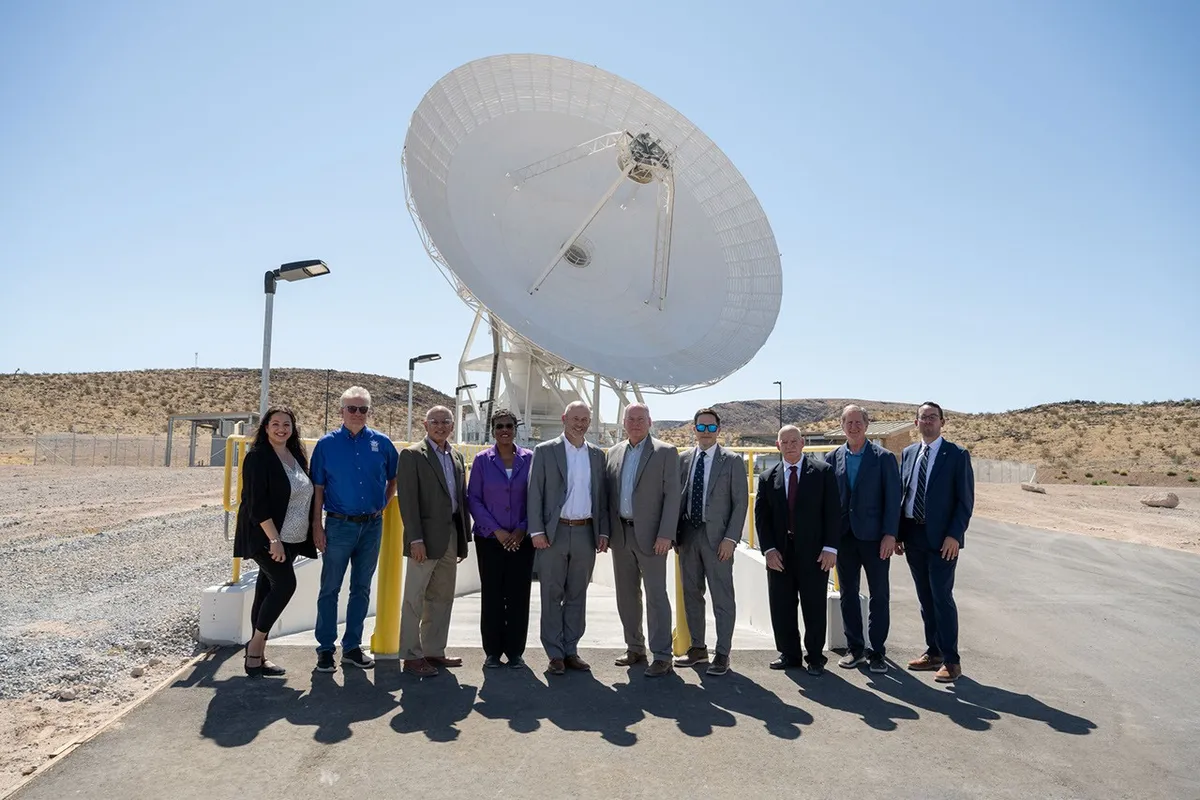
During its early flight, Roman communicates with ground controllers through the Near Space Network. This network uses ground stations and relay satellites for tracking and commands. About 70 minutes after launch, communications shifted to NASA’s Deep Space Network. This system will guide Roman to the second Sun-Earth Lagrange point, or L2, which is about one million miles from Earth.
Roman will first communicate through the Canberra Deep Space Communication Complex in Australia. Later, communications will move to the Madrid Deep Space Communication Complex in Spain, and then to the Goldstone Deep Space Communication Complex in California. These stations ensure continuous contact with the observatory.
Unfolding and Observing
One hour and 23 minutes after launch, Roman's solar panels and lower instrument sun shade successfully deployed. Over the next few days, its high-gain antenna and visor-like aperture cover will also unfold. Ground controllers will begin the first of two course corrections, and the Coronagraph Instrument will power on.
Among its many instruments is a coronagraph, which is basically a fancy sunshade for telescopes. It blocks out the bright light of distant stars so Roman can directly image the much fainter planets orbiting them. For now, it'll focus on Jupiter-sized worlds, but the tech it's testing is crucial for future missions hoping to find Earth-like planets and, you know, maybe some alien neighbors. Because why not aim high?
A few weeks into the journey, Roman’s main science instrument, the Wide Field Instrument, will activate. This instrument is a 300-megapixel infrared camera with 18 4K detectors. These detectors will capture photons to create detailed panoramic views of the universe.
Roman's design allows it to move quickly across the sky without long pauses. This speed is crucial, as Roman is designed to survey the universe a thousand times faster than NASA’s Hubble Space Telescope.
Don't hold your breath for immediate selfies from space, though. Roman's first images aren't expected until early 2027. But once it starts transmitting, get ready for an avalanche of data: 1.4 terabytes daily, the highest data rate of any NASA astrophysics mission to date. They'll need machine learning, AI, and even citizen scientists to sift through it all. So, if you've ever wanted to discover a galaxy, now's your chance.
Julie McEnery, Roman’s senior project scientist at NASA Goddard, said that humanity has never viewed the universe with eyes like Roman’s before. She anticipates many new discoveries in the coming year.
Roman is the fourth primary NASA mission to launch on a Falcon Heavy rocket. NASA’s Launch Services Program worked with SpaceX to move the launch date forward after the telescope was completed ahead of schedule.
NASA Goddard manages the Roman mission. Other participants include NASA’s Jet Propulsion Laboratory, Caltech/IPAC, the Space Telescope Science Institute, and various research institutions. International partners include ESA, JAXA, the French space agency CNES, and the Max Planck Institute for Astronomy in Germany.