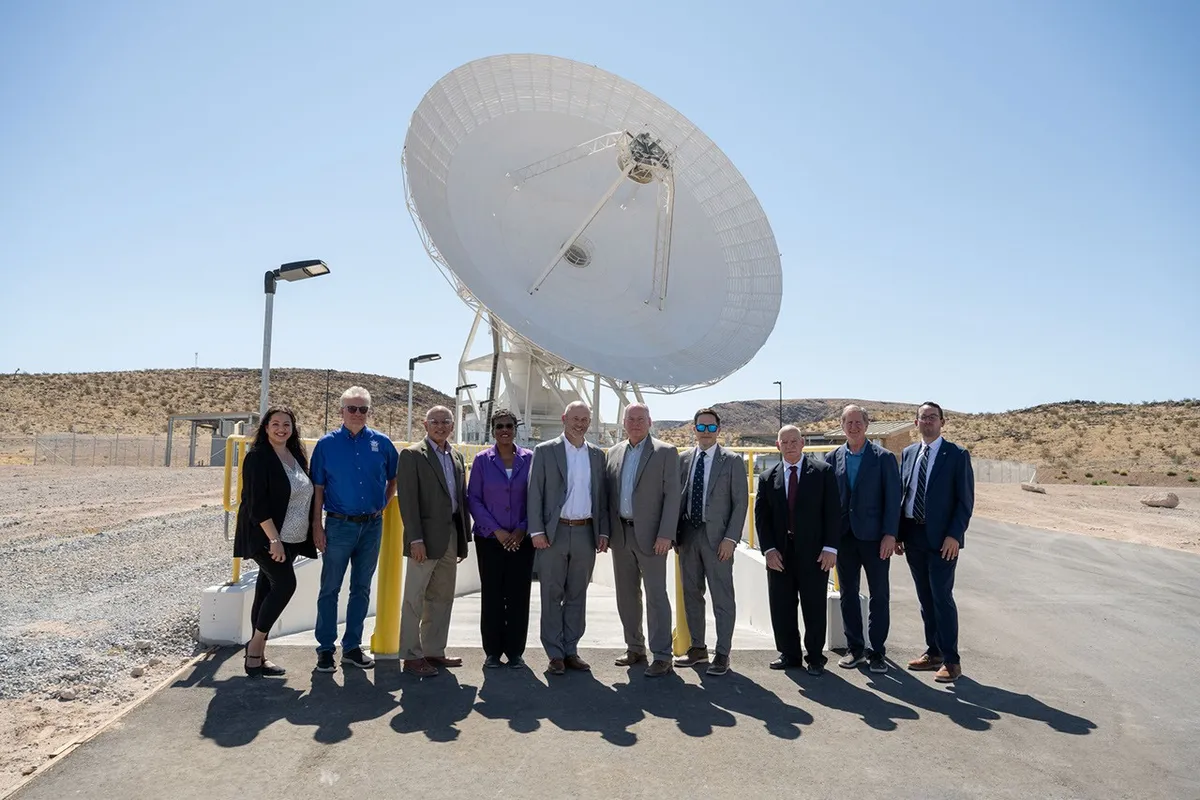
NASA recently threw a party in the California desert, complete with a giant ribbon-cutting, for what's essentially the universe's most powerful Wi-Fi antenna. Meet Deep Space Station 23 (DSS-23), the newest star in the Deep Space Network (DSN).
Picture this: a 114-foot-wide (that's 34 meters for our metric friends) dish, perched near Barstow, California, ready to chat with probes zipping around Jupiter, Mars, and who knows where else. It's like upgrading your ancient dial-up modem to fiber optics, but for spacecraft billions of miles away.
This isn't just about better reception for your cosmic Netflix. The DSN is NASA's lifeline to its most ambitious missions. It's how they send commands to rovers on Mars, track the Voyager probes chilling in interstellar space, and, most importantly, download all that juicy scientific data that helps us understand the universe.
We're a new kind of news feed.
Regular news is designed to drain you. We're a non-profit built to restore you. Every story we publish is scored for impact, progress, and hope.
Start Your News DetoxDSS-23 is part of a larger glow-up for the DSN, called the Aperture Enhancement Project, which kicked off way back in 2009. The goal? To add six new, super-versatile antennas to the network. These aren't just one-trick ponies; they can handle multiple radio frequencies, meaning they can juggle conversations with a whole fleet of missions simultaneously.
So, while you're struggling to get a signal in your basement, NASA's out here building bigger, better ears to listen to the whispers of the cosmos. Because apparently that's where the good stories are happening.