For decades, atomic nuclei have been doing something baffling: emitting a whole lot more low-energy gamma rays than they should. It was like a cosmic accounting error, and no one could figure out why.
Now, a team of scientists, fresh from the Facility for Rare Isotope Beams (FRIB), has cracked the code. The culprit? Magnetic shenanigans inside the nucleus. Yes, apparently, even atoms have their drama. This discovery, published in Nature, finally explains the 'low-energy enhancement' (LEE) that's been stumping physicists.
Think of it this way: when an excited atomic nucleus calms down, it releases gamma rays. These rays are like tiny bursts of light, and their energy tells scientists a lot about what's happening inside. But some nuclei were just… oversharing on the low-energy end. Theories couldn't explain it, leaving a rather awkward gap in our understanding of the universe.
We're a new kind of news feed.
Regular news is designed to drain you. We're a non-profit built to restore you. Every story we publish is scored for impact, progress, and hope.
Start Your News DetoxEleanor Ronning, the lead author and a former FRIB grad student, put it best: this enhancement was a complete surprise. The universe, it seems, enjoys a good plot twist.
Why Magnetic Mayhem Matters
It turns out, understanding this internal magnetic chaos isn't just for bragging rights among physicists. It's crucial for understanding how heavy elements — you know, the stuff everything around you is made of — actually form in space.
LEE directly affects how often nuclei absorb neutrons, a process vital for forging elements during cosmic blockbusters like supernova explosions and neutron star mergers. If you've ever wondered where the gold in your jewelry came from, you're looking at the consequences of these reactions. Messing with LEE means messing with the calculations for these reaction rates, which then ripples out to models of stellar processes, nuclear energy, and even national security applications. Because apparently that's where we are now: the secret life of atomic nuclei has national security implications.
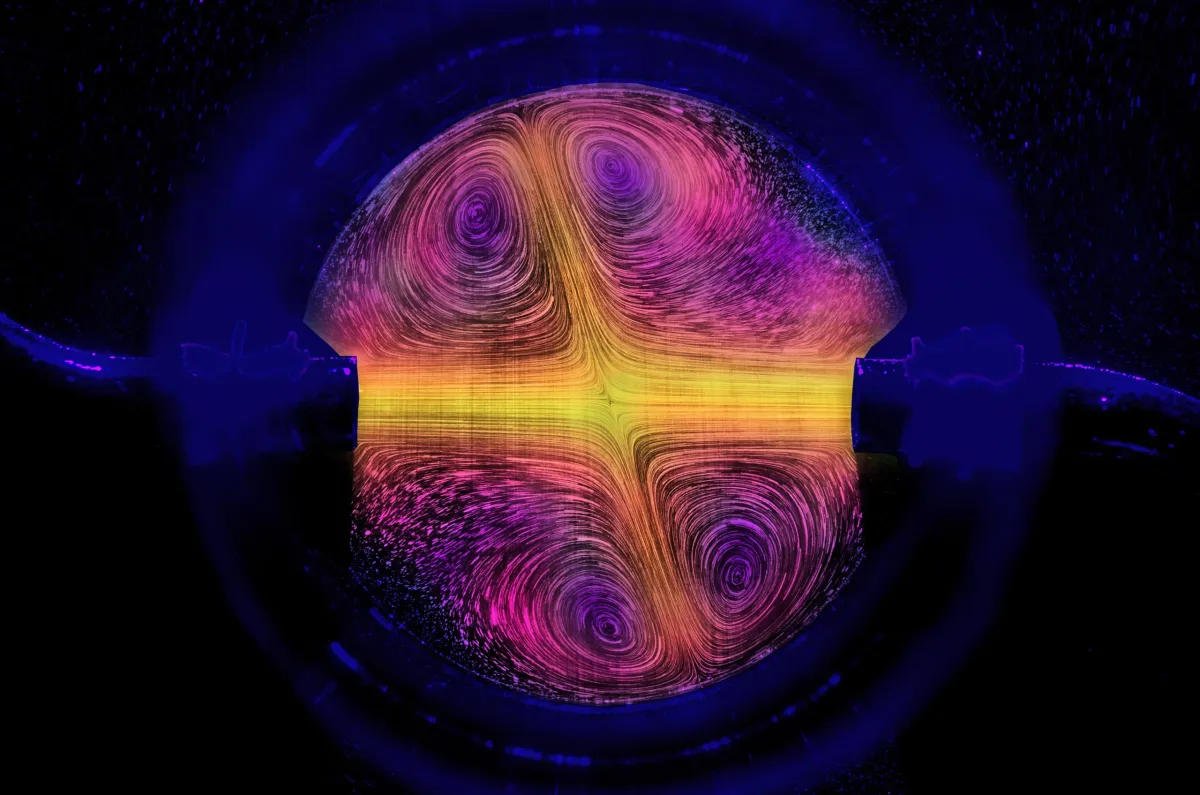
Measuring this subtle signal is incredibly tricky, like trying to hear a whisper during a rock concert. But thanks to new experimental tools and analysis techniques at FRIB, they managed to isolate the hidden magnetic signal in zinc-70. They even used two different states of its parent nucleus, copper-70, to get complementary views — a bit like checking your social media from two different angles to get the full story.
This breakthrough provides a new benchmark for nuclear theory and will guide future studies. It also highlights the power of massive collaborations, with scientists from 25 institutions across multiple countries pitching in. Because sometimes, to solve a decades-old mystery, you just need a lot of very smart people and some seriously sensitive magnets.
And if that's not enough to make you want to tell someone, consider this: the universe is even weirder and more wonderful than we thought, and we're just now getting a peek at its magnetic secrets.