Omar Yaghi harvests water from desert air.
A UC Berkeley chemist turned childhood struggles into breakthrough science—extracting clean water from desert air through years of productive failure.
Breakthroughs happen quietly. We make sure you hear about them.
2406 stories

A UC Berkeley chemist turned childhood struggles into breakthrough science—extracting clean water from desert air through years of productive failure.

A potentially hazardous asteroid will narrowly miss both Earth and the moon in 2032.

Billions of tons of CO2 must vanish underground by 2100—or climate catastrophe accelerates. Scientists are betting on a radical solution: turning carbon into stone.

Scientists may have discovered a new mineral on Mars—one that only forms when iron sulfates exceed 100°C, suggesting ancient geothermal activity shaped the planet's geology.

Liquid water might thrive on the perpetually dark sides of distant planets—upending decades of assumptions about where alien life could hide.
Join 50,000+ readers who receive our daily digest of the most uplifting stories from around the world.

A 3D gas map is revealing secrets about Earth's mysterious atmosphere.

The Moon once had a powerful magnetic field—and scientists just proved it.

Scientists engineered light-activated proteins that switch on, sense signals, and perform computations inside living cells—opening new frontiers in biological engineering.

Scientists are reprogramming your gut bacteria into medicine factories. UC Berkeley researcher Carlotta Ronda reveals how CRISPR transforms microbes into personalized health boosters.

Scientists transplanted a naked mole rat gene into mice—and the rodents lived longer, healthier lives. The discovery reveals how longevity secrets can jump between species.
Brightcast is dedicated to restoring faith in humanity by highlighting the progress, solutions, and kindness that often go unnoticed. We believe in a balanced worldview.
Read our full mission →
Deworming children transforms lives decades later. A 30-year UC Berkeley study in Kenya reveals treating intestinal parasites boosts adult earnings and improves outcomes for the next generation.

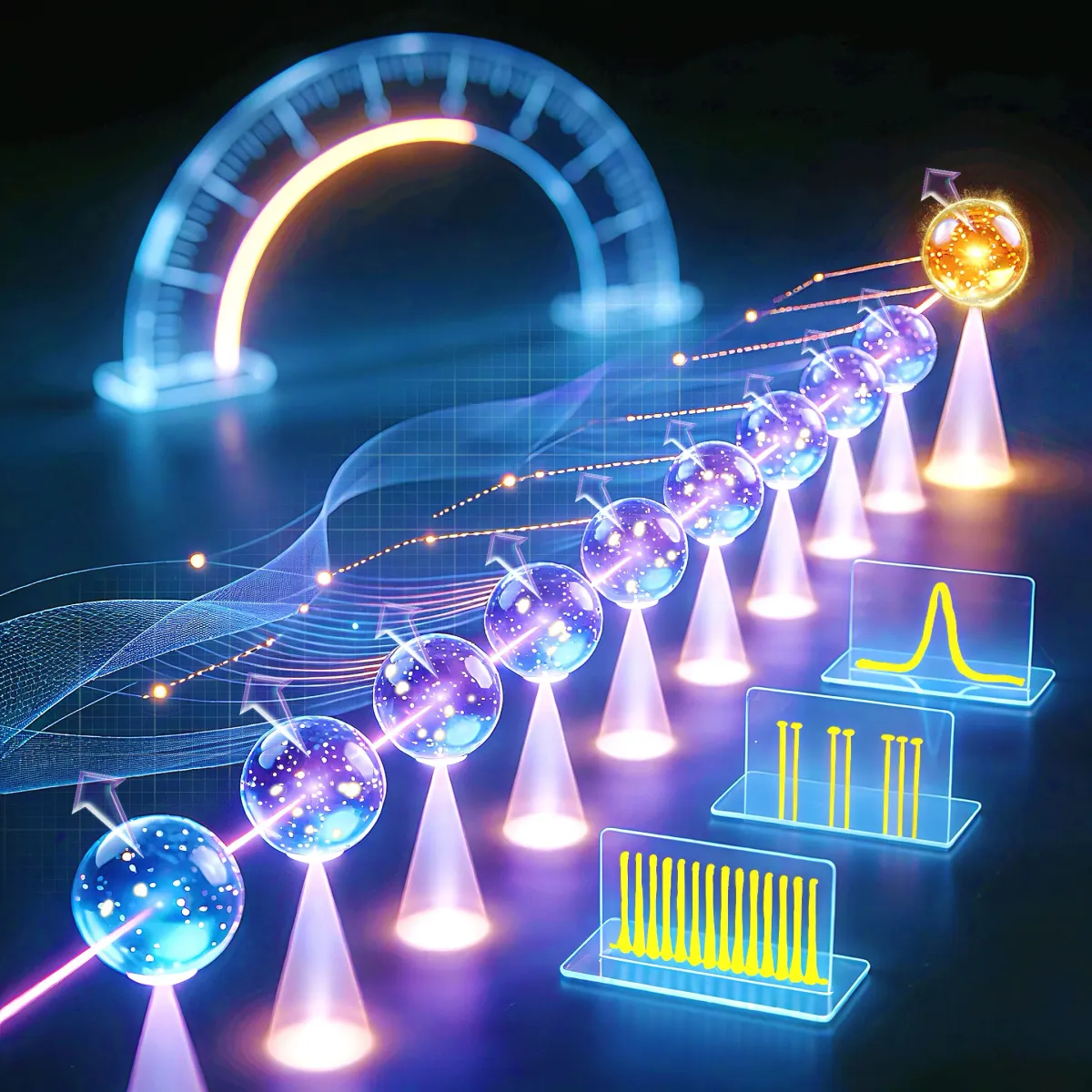
Electrons in solar materials can be launched across molecules almost as fast as nature allows, thanks to tiny atomic vibrations acting like a "molecular catapult.

Our galaxy isn't the universe's center—it's trapped in a cosmic sheet. New simulations reveal why nearby galaxies flee: we're surrounded by vast empty voids.

Scientists just uncovered a 90-million-year-old fossil that rewrites dinosaur evolution. This tiny Patagonian creature reveals how alvarezsaurs conquered the globe.

Scientists have unlocked a way to harness infrared light for green hydrogen production—solving solar energy's biggest waste problem.
Know someone who needs a boost? Share Brightcast with your friends and family.

Neurons navigate the brain using chemical signals—but a newly discovered force-sensing protein reveals that physical stiffness matters just as much. Tissue rigidity triggers guidance molecules through Piezo1.

Two cannabis compounds may unlock your liver's natural detox powers—CBD and CBG show promise against fatty liver disease in groundbreaking research.

T. rex took 40 years to reach full size—twice as long as previously thought. New analysis of fossilized bone growth rings reveals the iconic predator's surprisingly slow maturation.
Scientists just cracked DNA's biggest storage problem: rewriting data. Researchers are transforming synthetic DNA from a one-time storage medium into a rewritable hard drive.

Brown University physicists have cracked the code on how long it takes to empty that stubborn bottle of ketchup—and it all comes down to fluid dynamics math.
Download the Brightcast app for a better reading experience, daily notifications, and offline access.
Download App
Chickpeas just grew in moon dirt—and NASA is paying attention. Scientists at UT Austin and Texas A&M harvested the first crop from simulated lunar soil, offering a blueprint for feeding astronauts on the Moon.

Over 100 bodies were secretly moved at Burr Oak Cemetery to resell plots—and a microscopic clump of moss cracked the case wide open.

A single cell builds the brain's staggering complexity without relying solely on chemical signals—new research upends a foundational assumption in neuroscience.

Scientists resurrected a 3.5-billion-year-old enzyme to crack Earth's most ancient mystery: can we actually trust the rocks that claim to hold life's earliest fingerprints?

Four cemetery workers exhumed over 100 bodies and relocated remains to resell burial plots—a scheme that shocked the Chicago area nearly two decades ago.
Join 50,000+ readers who receive our daily digest of the most uplifting stories from around the world.

Scientists engineered heat-sensitive switches that precisely control protein activity through tiny temperature changes—a breakthrough modular design from Heidelberg University researchers.

Atomically thin tungsten disulfide—just one layer of atoms—now captures light with unprecedented strength, revolutionizing nanophotonics and opening new possibilities for quantum technology.

Ötzi the Iceman wore moss in his boots. So did countless indigenous cultures. Now scientists are rediscovering what humans have always known: moss changes everything.

NASA's twin ESCAPADE probes are exploring uncharted territory in Earth's magnetic field—a crucial test before their Mars mission later this year.

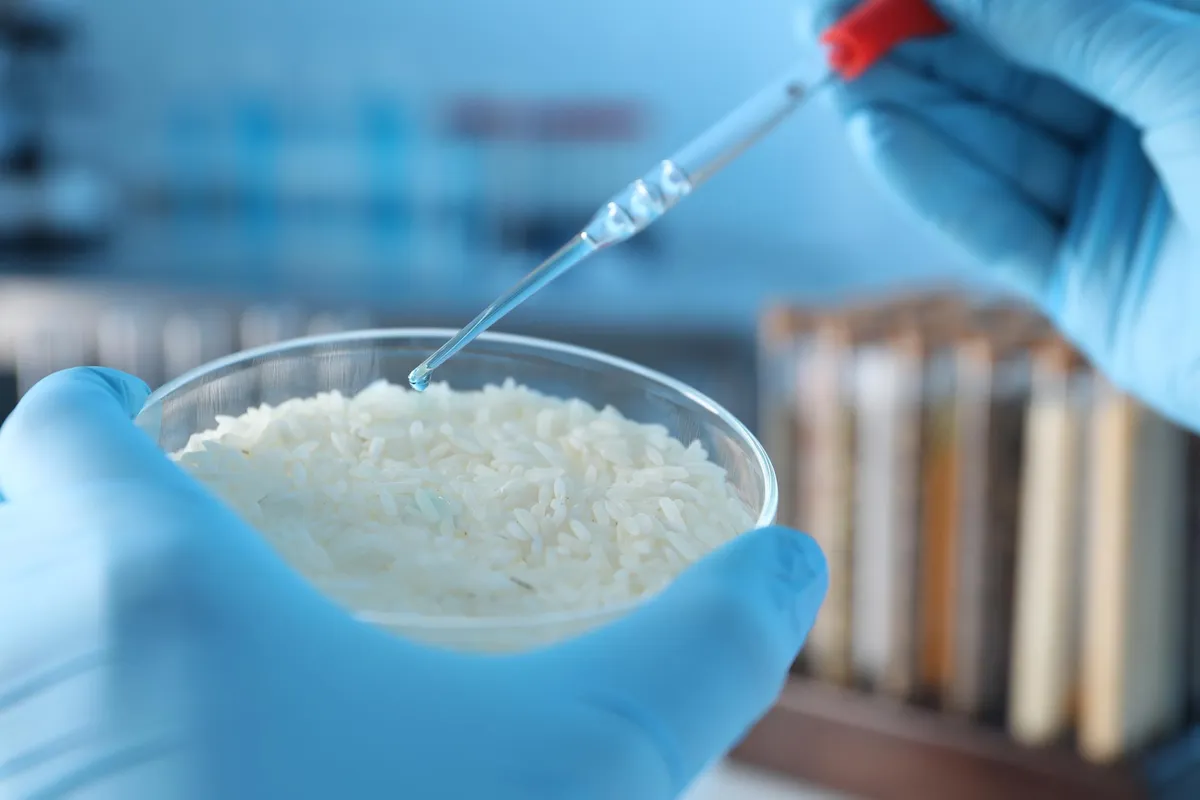
Vegan cheese tastes great but lacks protein—until now. University of Arkansas researchers discovered rice could be the missing ingredient for truly nutritious plant-based cheese.
Brightcast is dedicated to restoring faith in humanity by highlighting the progress, solutions, and kindness that often go unnoticed. We believe in a balanced worldview.
Read our full mission →
Scientists just cracked how to spot the perfect battery materials in seconds. An AI technique detects liquid-like ion motion, accelerating the hunt for next-generation solid-state batteries.

A single floating cookie crumb could sabotage an entire space mission. NASA's astronauts face a puzzle: craft meals that maximize nutrition while minimizing the chaos of weightless crumbs.

Europe's space race just got a breakthrough: a self-healing material that could finally make reusable rockets viable. Swiss startup CompPair is partnering with the ESA to transform spacecraft design.

Scientists may have discovered a triplet superconductor in NbRe—a material that could enable zero-resistance spin transport and revolutionize quantum computing.

Read this story in English here. A fin de lograr el objetivo nacional de llevar astronautas estadounidenses a la superficie de la Luna y mantener la superioridad de Estados Unidos en exploración y descubrimientos, la NASA anunció el 27 de febrero que aumentará la frecuencia de sus misiones con el......
Know someone who needs a boost? Share Brightcast with your friends and family.

Japanese snow monkeys' hot spring baths do more than warm them—they're reshaping their microbiomes. Regular soaking alters lice patterns and gut bacteria in surprising ways.

A supercomputer that performs a quintillion calculations per second is now tackling fusion energy—cracking one of science's hardest problems by simulating plasma hotter than the sun.

Iron-breathing microbes were life's secret weapon in Earth's poisonous, oxygen-free past. These ancient organisms may have been the key to survival itself.

Pregnant women's brains physically shrink—and that's actually a sign they're becoming better mothers, new research reveals.

Scientists have engineered bacteria to infiltrate and destroy tumors from within—a breakthrough approach that could transform cancer treatment.