Watch scientists name a new freshwater fish nearly every day of 2025.
Scientists discovered nearly one new freshwater fish species every day in 2025—309 total, the most in eight years and third-highest on record since 1758.
from Mongabay
Breakthroughs happen quietly. We make sure you hear about them.
1404 stories

Scientists discovered nearly one new freshwater fish species every day in 2025—309 total, the most in eight years and third-highest on record since 1758.
from Mongabay

A tropical katydid transforms from hot pink to green in two weeks—a dramatic color-shift scientists say helps it vanish into rainforest foliage.
from Phys.org

Europe just built its first machine to simulate the deadliest radiation threat astronauts face in deep space—galactic cosmic rays that strip away Earth's protective shield.
from Interesting Engineering

Cats, humans, and dogs share the same cancer-causing mutations—a groundbreaking discovery that could transform how we treat tumors across species.
from SciTechDaily

The Romans harnessed Earth's heat 2,000 years ago—yet geothermal energy remains vastly underutilized today despite being clean, continuous, and widely accessible.
from MIT News - Innovation
Join 50,000+ readers who receive our daily digest of the most uplifting stories from around the world.

Scientists just cracked how your skin senses the lightest touch. Scripps Research discovered a key protein translates physical pressure into brain signals with stunning precision.
from SciTechDaily

South Africa joins 34 nations pledging to triple nuclear energy by 2050—a climate strategy that signals a major shift in the country's energy future.
from Mongabay

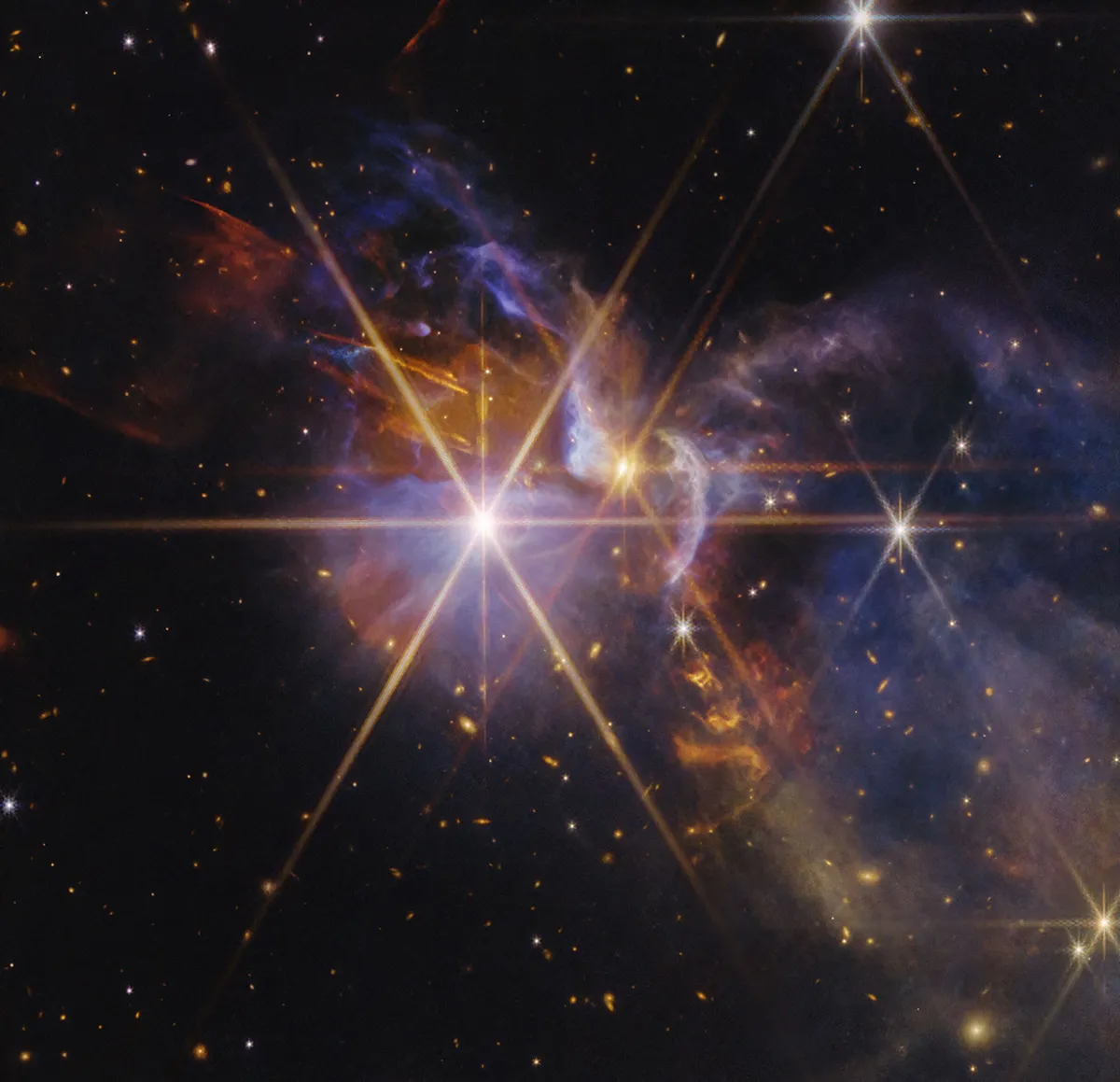
Magnetized stellar corpses may be the cosmic engines behind the universe's brightest explosions.
from Smithsonian Smart News

Chinese researchers have cracked a quantum puzzle: engineering quantum dots to reliably produce entangled photon pairs—a breakthrough that could revolutionize quantum computing and cryptography.
from Phys.org

Astronomers have mapped the universe's hidden cosmic web—revealing galaxies and gas invisible to conventional telescopes by detecting hydrogen light from the early universe.
from SciTechDaily
Brightcast is dedicated to restoring faith in humanity by highlighting the progress, solutions, and kindness that often go unnoticed. We believe in a balanced worldview.
Read our full mission →
NASA targets April 1 for Artemis II, a crewed lunar flyby that would mark humanity's first moon mission in over 50 years—if the long-delayed launch finally stays on schedule.
from The Guardian Science

Blood proteins could reveal Alzheimer's years before symptoms appear. Researchers found three proteins show telltale shape changes that track disease progression.
from ScienceDaily

NASA cleared technical hurdles blocking its Artemis II Moon mission—now targeting early April for launch.
from BBC Science & Environment

Humans are finally going back to the moon. NASA opens a six-day launch window April 1 from Kennedy Space Center—the first crewed lunar mission since Apollo 17 ended in 1972.
from NPR Science

Light just cracked one of chemistry's toughest puzzles: making housane, a rare, ultra-strained molecule that could unlock new drugs. Scientists finally have a practical way to build it.
from SciTechDaily
Know someone who needs a boost? Share Brightcast with your friends and family.

A New York man has made it his mission to roast the planets—and no celestial body is safe from his brutal critiques on Instagram.
from Upworthy

Supercomputers are cracking the code of chaos to make nuclear reactors safer. Argonne researchers are ditching approximations for raw computing power to model turbulent flow—the key to a carbon-free future.
from Interesting Engineering

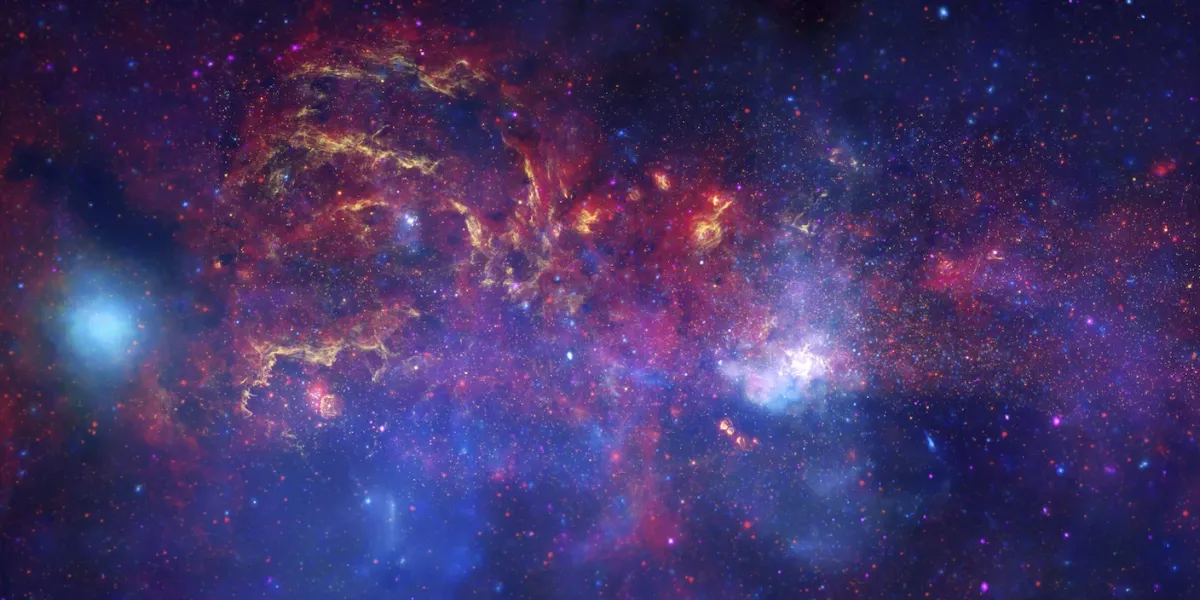
Your Sun may have wandered billions of miles from its birthplace. New research reveals our star was part of a massive stellar exodus from the Milky Way's core.
from SciTechDaily

Comb jellies—among Earth's most ancient animals—possess surprisingly sophisticated sensory structures that challenge our understanding of how complexity evolved.
from SciTechDaily

Scientists are building MOTHRA, a revolutionary telescope that will reveal the universe's hidden cosmic web—the faint gas filaments connecting galaxies and tracing dark matter's invisible architecture.
from Interesting Engineering
Download the Brightcast app for a better reading experience, daily notifications, and offline access.
Download App
Pregnancy rewires the brain—and each child compounds the changes. New research shows these neural transformations don't reset after your first baby.
from SciTechDaily

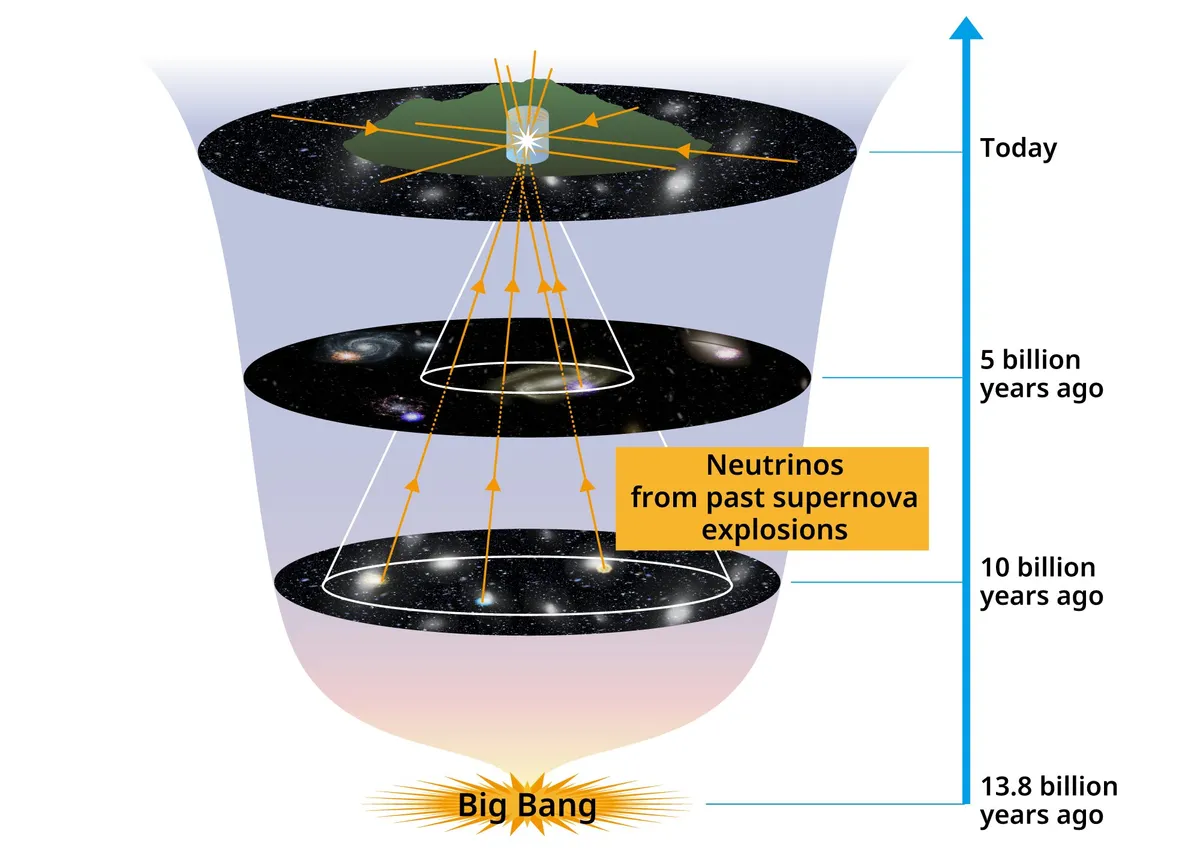
A star 25 times our sun's mass exploded a billion light-years away—and it was 10 times brighter than normal supernovas. Astronomers tracked the cosmic fireworks for over 200 days.
from Popular Science

Consciousness might not be what we think it is—scientists say the answer lies in how brains and machines process information, not where they're located.
from SciTechDaily

Magnetized neutron stars spinning at cosmic speeds may power the universe's brightest explosions—and scientists just found proof.
from UC Berkeley News

Oregon State just landed $750,000 to unlock geothermal energy that could generate 63 terawatts—more than eight times global electricity output.
from Interesting Engineering
Join 50,000+ readers who receive our daily digest of the most uplifting stories from around the world.

Robots are now scanning ants like never before. Scientists have created Antscan, a digital library of nearly 800 ant species, using X-ray technology to reveal their hidden anatomy in stunning 3D detail.
from Mongabay

Hedgehogs can hear ultrasound—a discovery that could save thousands from deadly roads using simple sound deterrents.
from The Guardian Science

Hornwort plants have cracked a molecular code that could revolutionize how crops capture carbon dioxide—and scientists just figured out how.
from ScienceDaily

Stellar rotation acts like a cosmic conveyor belt inside red giant stars, new simulations show—fundamentally reshaping how we understand these dying suns.
from SciTechDaily

Your brain's endurance gains don't happen during exercise—they happen after, when specific neurons stay activated to cement the improvements.
from SciTechDaily
Brightcast is dedicated to restoring faith in humanity by highlighting the progress, solutions, and kindness that often go unnoticed. We believe in a balanced worldview.
Read our full mission →
Beneath Antarctica's ice, a hidden lake harbors oxygen levels that shouldn't exist—and microbial structures that mirror Earth's ancient past.
from NASA

A newly discovered African magic mushroom species is rewriting what scientists thought they knew about psychedelic fungi evolution—pushing their common ancestor back 1.5 million years.
from Popular Science

Israeli researchers just cracked a major laser problem: merging dozens of semiconductor lasers into one fiber without losing power. Their 3D-printed photonic device could transform high-power laser industries.
from Interesting Engineering

Ancient graffiti rewrites history: 30 Indian inscriptions found in Egypt prove traders and travelers crossed continents 2,000 years ago.
from Smithsonian Magazine

Scientists have finally solved a century-old mystery: Lake St Clair's true depth. CSIRO's high-resolution underwater map reveals what Tasmania's deepest lake has been hiding.
from SciTechDaily
Know someone who needs a boost? Share Brightcast with your friends and family.

Cancer cells evolve like Darwin's finches—adapting to survive and spread. Now AI is revealing the genetic rules behind tumor progression.
from MIT News - Health

Cemetery workers claimed innocence—until moss buried for decades revealed the truth.
from Smithsonian Magazine

Mars just revealed a secret locked in its ancient rocks: scientists discovered a never-before-seen mineral hiding in sulfate deposits near Valles Marineris.
from ScienceDaily

Scientists have discovered a ferroelectric crystal that controls ultraviolet and blue light—potentially revolutionizing how we build photonic chips.
from SciTechDaily

Drought and political collapse nearly broke Maya civilization—yet a Belize excavation reveals how Postclassic communities didn't just survive, they thrived.
from ARTnews