The "dumb machine" just fueled a breakthrough in fusion energy.
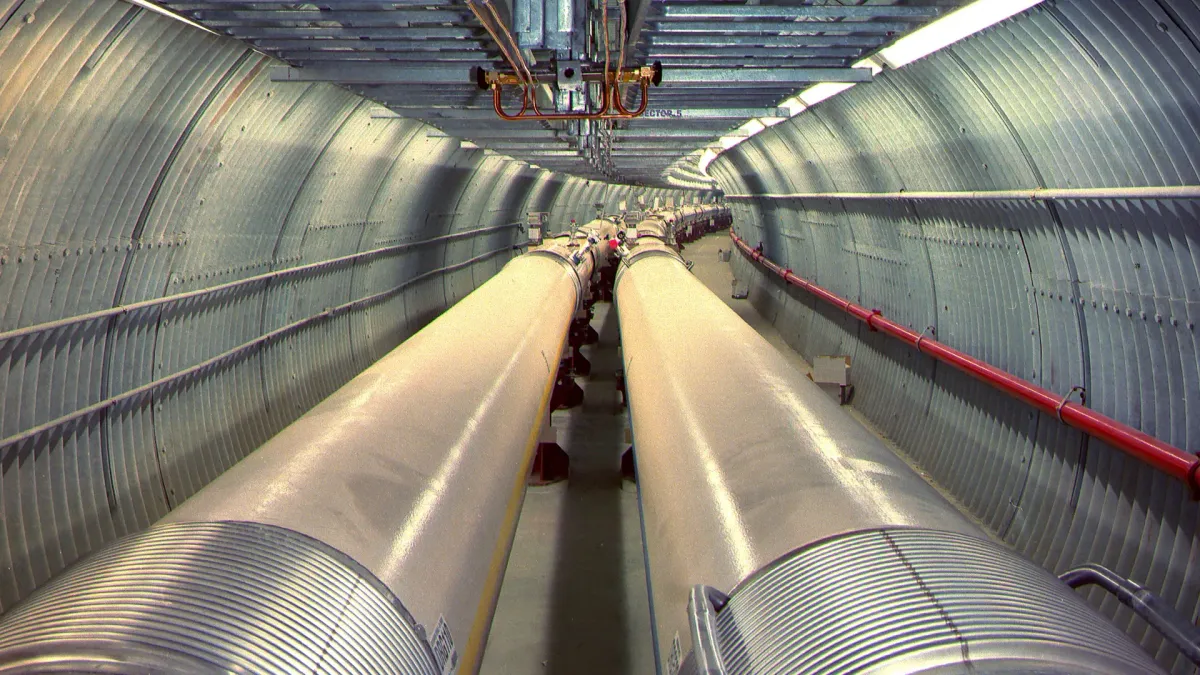
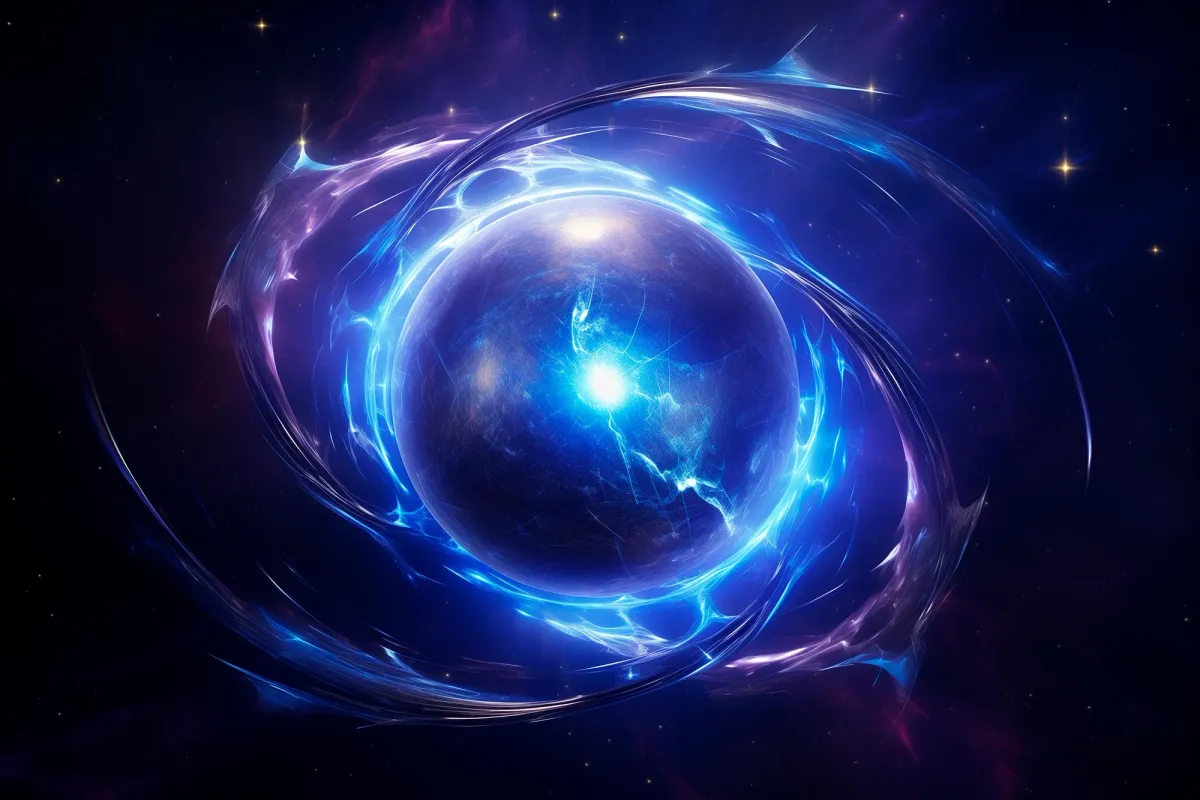
Stellarators are notoriously hard to build. But could these "dumb machines" be the key to unlocking clean, limitless fusion energy?
Breakthroughs happen quietly. We make sure you hear about them.
2406 stories

Stellarators are notoriously hard to build. But could these "dumb machines" be the key to unlocking clean, limitless fusion energy?

A translucent microsnail, smaller than a pinhead, was discovered in a Cambodian cave. Named Clostophis udayaditinus, it honors an 11th-century Angkor king.

Ultrafast lasers precisely tracked copper plasma formation and ionization. Picosecond data reveals rapid ion growth and decay, crucial for advancing fusion research.

Scientists thought learning links between events needed brains. Now, a brainless pond creature challenges that, proving complex learning isn't just for neural networks.

Ancient Pelusium reveals a stunning discovery: a unique structure blending Egyptian, Greek, and Roman architectural styles, unearthed at the Nile Delta's edge.
Join 50,000+ readers who receive our daily digest of the most uplifting stories from around the world.

Winning an election feels good, but new research suggests emotions alone don't explain why winners are more satisfied with democracy than losers. What truly drives this "winner-loser gap"?

Artificial neurons now fire so realistically they activate living brain cells in mouse tissue. This breakthrough uses soft, flexible electronics, mimicking biological signaling for efficient AI.

El Greco's "The Baptism of Christ" authorship was debated for years, with experts analyzing brushstrokes. Now, AI microscopically examines the paint, offering a new perspective.

Uncover art's hidden creators! Case Western Reserve scientists developed a new AI program to help art historians identify how many artists contributed to centuries-old masterpieces.

On Earth, gripping keeps objects from falling. In space, there's no gravity. But move an object, and inertia sends it flying—up, down, left, right.
Brightcast is dedicated to restoring faith in humanity by highlighting the progress, solutions, and kindness that often go unnoticed. We believe in a balanced worldview.
Read our full mission →
South Korean scientists unveiled a gas battery that turns greenhouse gases into electricity. Their "Gas Capture and Electricity Generator" (GCEG) transforms pollution into power.

Time can tick both fast and slow simultaneously. Researchers at Stevens, CSU, and NIST propose a new theory: time exists in quantum superposition, unlocking fundamental physics mysteries with new quantum tech.

Ghostly jellyfish can tell ancient tales! Near Quebec City, marine paleontologists discovered Paleocanna tentaculum, a new species of invertebrate that swayed in Paleozoic oceans 450 million years ago.

Beneath a Welsh landmark, a cave reveals 120,000 years of human and animal visits. Archaeologists are now launching a five-year excavation project to uncover its secrets.

Imagine regrowing a limb. A new cross-species study pinpoints key genes governing regeneration, potentially unlocking human limb regrowth.
Know someone who needs a boost? Share Brightcast with your friends and family.

Witness an "Earthset" from space! Artemis II Commander Reid Wiseman filmed Earth disappearing behind the moon with his iPhone, sharing the stunning, uncut video on Instagram.

Ancient Polish diets reveal how food, identity, and inequality shaped prehistoric life. Discover the surprising connections between what people ate and who they were.

Scientists finally grew dolomite in the lab after 200 years! They cracked a geological puzzle, finding tiny defects stall growth, but nature washes them away.

This week, our brains got an upgrade, AI learned to design proteins, and the cosmos hinted at more alien life. A truly mind-bending week in science.

Want to live longer, healthier, and boost cancer treatment? A healthy adult thymus is key.
Download the Brightcast app for a better reading experience, daily notifications, and offline access.
Download App
Mercury, a mysterious rocky planet, hides a secret: its crust is iron-poor, sulfur-rich, and chemically reduced. Two missions unveiled this unique composition.

The floor is literally lava on exoplanet L 98-59 d! New observations reveal a molten ocean and odd atmosphere, suggesting this small, strange world could be an entirely new category of planet.

The Perseus Cluster, a colossal galaxy cluster in the constellation Perseus, is one of the largest structures in the observable universe. It contains over a thousand galaxies, weighing a thousand trillion suns.

Soil microbes now power underground sensors! Scientists developed a fuel cell that uses dirt to generate electricity, monitoring moisture or touch without batteries or solar.

Egyptian archaeologists unearthed a temple complex at ancient Pelusium, Sinai. Its centerpiece: a 100-foot circular basin, once fed by the Nile, surrounded by drainage channels and a central plinth.
Join 50,000+ readers who receive our daily digest of the most uplifting stories from around the world.

Imagine fusion power at room temperature, no massive reactors needed. Muon-catalyzed fusion promises this, replacing electrons with muons to fuse nuclei. Yet, it remains stubbornly impractical.

Predicting streamflow and nitrogen export is key for farm management. Deep learning excels temporally but struggles to generalize spatially, especially with limited data.

A hot robotics startup, Physical Intelligence, claims its new robot brain can learn tasks it was never taught. This breakthrough could revolutionize AI and robotics.

Northwestern engineers just printed artificial neurons that talk to real ones! These flexible, low-cost devices generate lifelike electrical signals, activating living brain cells.

6.6 million years ago, the ancestral Colorado River created an ancient Arizona lake. It then spilled westward, carving the landscape that would become the Grand Canyon.
Brightcast is dedicated to restoring faith in humanity by highlighting the progress, solutions, and kindness that often go unnoticed. We believe in a balanced worldview.
Read our full mission →
Caffeine doesn't just perk up humans—it sharpens ant minds too. Caffeinated Argentine ants learned to find food 38% faster, taking straighter paths. They weren't quicker, just more focused.

From penguins detecting chemicals to a pregnancy vaccine cutting infant hospital stays by 80%, this week showed how precise solutions and clever tech are changing the game for our planet and our health.

Ancient phytoplankton reveal a shocking truth: North Atlantic temperatures have been cooler than thought since the Miocene, thanks to a new temperature proxy.

Giant black holes, weighing a billion suns, existed too early after the Big Bang. Dark matter decay could solve this cosmic mystery, explaining their impossible formation before the first stars.

NASA just approved Satellogic's NewSat constellation data (Mark IV & V sensors) for scientific use! This green light from NASA's CSDA program opens new doors for research.
Know someone who needs a boost? Share Brightcast with your friends and family.

A Swiss chemist synthesized a consciousness-altering drug in 1943. His discovery revolutionized medicine, psychiatry, and biology—and fueled the counterculture movement.

Witness the invisible: A new imaging method combines laser encoding and AI to capture ultrafast microscopic events with unprecedented detail, revealing secrets previously hidden.

Quantum dots now enable stable, long-distance secure communication. This time-bin QKD breakthrough offers practical performance for next-gen encryption.

AI is advancing, but the next tech leap? It hinges on replicating unique human intelligence, specifically how we learn as children, explains UC Berkeley's Alison Gopnik.

Four brilliant minds—two historians, a biologist, and a bioengineer—just secured stipends to pursue their independent work under "the freest possible conditions.